In my discussions with families who need support with baby and child sleep, I often come across new terms or labels used to describe what they’ve been told is contributing to their child’s sleep issues.
One of the most common is that their little one is a “high-needs” baby. The problem is, “high-needs” is also one of the most commonly misused terms out there.
In this article, I discuss:
“High-needs” babies
“High-needs” baby or exhausted baby?
Breaking the cycle
“High-needs” babies
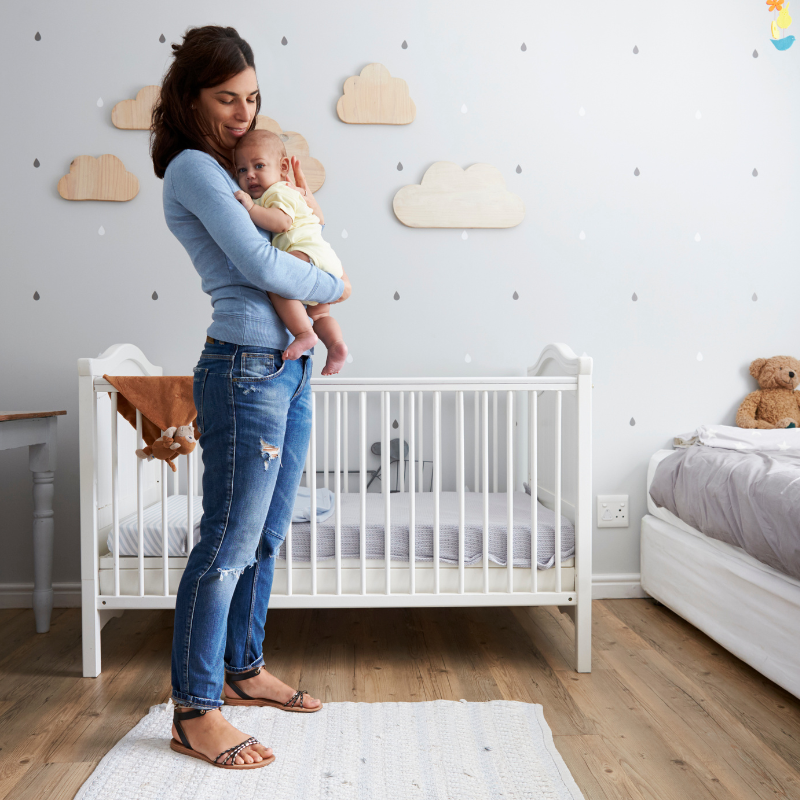
All babies are different – even siblings can be completely different from each other. Some babies are what you might call “easy,” while others can be more challenging to parent. These are often the babies given the “high-needs” label.
“Fussy” and “high-needs (HN)” babies didn’t really exist years ago, yet these days it feels like every second baby is being labelled as one.
But why?
“High-needs” is not a medical condition, so it’s not something healthcare professionals are diagnosing more often. Instead, it’s a term often shared by well-meaning parents with their own “high-needs” babies, offering reassurance to others who are struggling.
As a parent doing your best, it can feel like a relief to hear that your baby’s behaviour is “normal” — that nothing is wrong, and it’s just who they are. This is exactly how I felt when my second baby, Harry, was labelled “high-needs.”
Accepting that your baby is “different but normal” can lift a weight emotionally — but it doesn’t make the day-to-day challenges any easier.
And this is where the problems begin.
To cope, you start making exceptions and caring for your baby differently… when really, you shouldn’t have to.
“High-needs” baby or exhausted baby?
According to what’s often shared, “high-needs” babies:
- Need less sleep
- Don’t like routine
- Can’t self-soothe
- Need constant attention day and night
But how is a parent meant to manage that?
Often, this leads to:
- More rocking and holding
- More feeding
- Longer wake times
- More stimulation
When I went through this with Harry, it felt like I was helping him. But in reality, I wasn’t meeting his basic needs — especially his need for sleep.
Everything I was doing was keeping him in a cycle of sleep deprivation and making it harder for him to sleep. It was also reinforcing the “fussy” behaviour I thought was just his personality.
What I learned is this:
While temperament can influence how a baby responds to sleep, there’s no strong evidence that temperament means a baby needs less sleep than others their age.
A more sensitive baby may wake more easily or struggle to resettle — but their sleep needs are still the same.
An overtired baby will:
- Struggle to settle
- Have broken, fragmented sleep
- Be more demanding
- Cry more
Which sounds exactly like a “high-needs” baby.
This then reinforces the label — and the cycle continues.
Breaking the cycle
Most families I work with come to me believing they have a “high-needs” baby.
We start by looking at the foundations:
- Feeding
- Appropriate wake windows
- Warmth and sleep environment
- Consistent bedtime and wake time
And almost every time, once these are in place, it becomes clear:
Their baby was never “high-needs.”
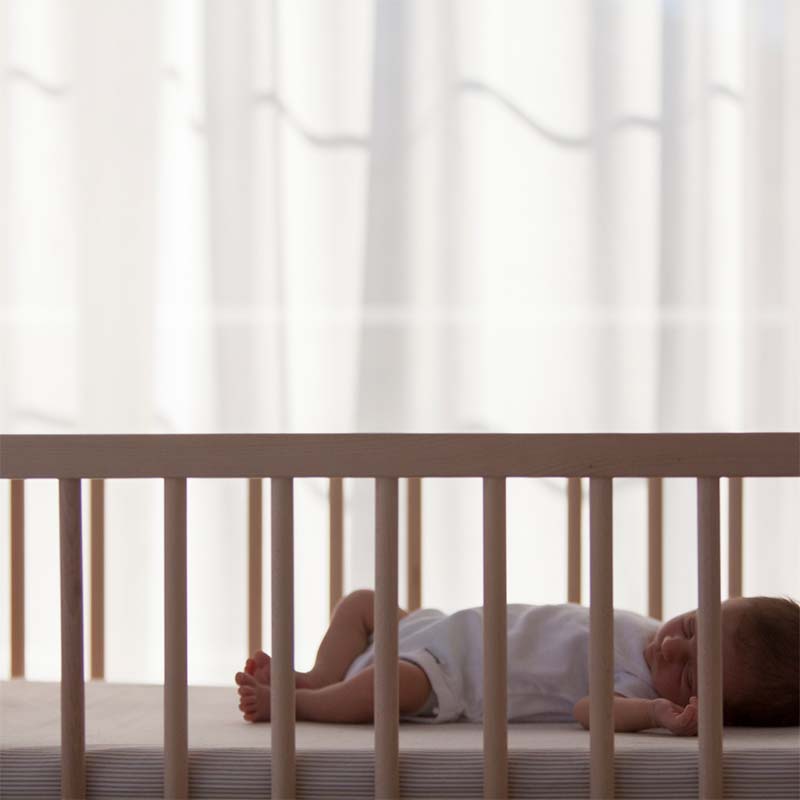
They were simply overtired and sleep deprived.
The label disappears.
As for Harry — once I stepped back and realised he was exhausted and needed proper sleep, everything changed.
With better sleep, he became a calm, happy, relaxed little boy… and he still is today 🤍
References
- Higuera, V. (2019). What Is a High Needs Baby? Healthline. https://www.healthline.com/health/baby/high-need-baby
- Ask Dr Sears. (2020). 12 Signs Your Baby is High Need. https://www.askdrsears.com/topics/health-concerns/fussy-baby/high-need-baby/12-features-high-need-baby/
- Williams, K.E. (2019). Sleep and Temperament in Early Childhood. In: Križan, Z. (eds) Sleep, Personality, and Social Behavior. Springer, Cham. https://doi.org/10.1007/978-3-030-30628-1_11
- Belmon, L. S., van Stralen, M. M., Busch, V., Harmsen, I. A., & Chinapaw, M. J. M. (2019). What are the determinants of children’s sleep behavior? A systematic review of longitudinal studies. Sleep medicine reviews, 43, 60–70. https://doi.org/10.1016/j.smrv.2018.09.007